Why I Work in Hand-Built Stoneware

Every ceramic piece I make starts the same way: with clay, my hands, and no wheel. I don't throw pots. I build everything by hand, coil by coil or slab by slab, which is a slower process than throwing but gives me a kind of control I've come to depend on, especially with the tremor I live with. Hand-building lets me work at my own pace and adjust as I go, instead of committing to a single continuous motion the way you have to on a wheel.
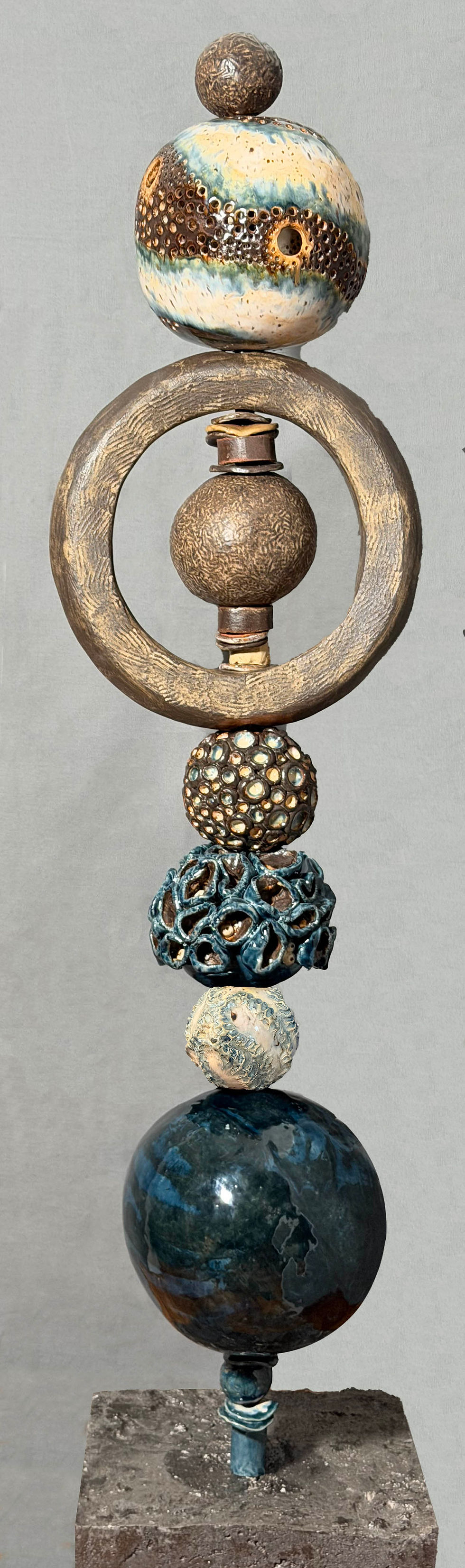
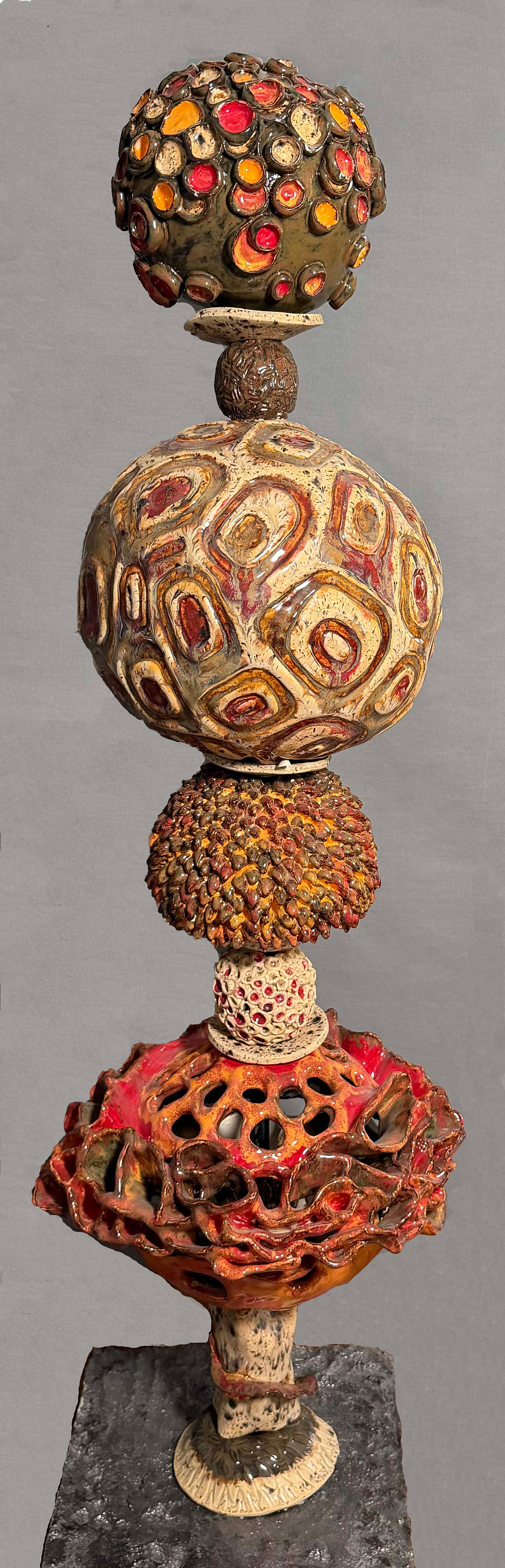
Stoneware is the clay body I use for almost everything, because it can take the kind of texture and layered glazing I like to build into a piece, and it holds up structurally at the scale I work in. The Witness columns, for example, stand between three and five feet tall and are assembled from separate hand-built sections. That only works because stoneware is strong enough to support its own weight once it's fired.
Firing happens in my own studio kiln in Potomac, Maryland. I fire everything myself, which means I control the whole process from the first coil of clay to the final glaze firing. There's a lot that can go wrong along the way. Clay can crack as it dries. Glazes can come out of the kiln looking completely different from how they went in. I've learned to treat that unpredictability as part of the material rather than something to eliminate.
Working this way, slowly and by hand, connects back to how I paint too. Clay is one of the oldest materials people have worked with. It holds the mark of a hand and the memory of fire, right there on its surface. Every piece carries evidence of how it was made, and I like that. Nothing about hand-built stoneware hides its own process, and neither, I hope, does the finished piece.
Shana


Comments